Zaini Media logoZAINIMEDIA

( 003 — Play )

Game Development Company in Dubai

Play is the deepest medium there is. A film is watched once; a game is chosen, repeatedly, by someone who wants to be there. As a mobile game development company and interactive studio, we build things people come back to, not just watch once.

( Featured — In-house game studio )

zainimedia.com/portfolio/zainilabs

Zaini Labs — our product studio for mobile games, fantasy sports and full digital platforms, designed, built and published in-house: 4 global apps, 10K+ downloads, 4.8★ average rating. Visit the studio ↗

( The apps — designed, built & published in-house )

RampRider — Scooter stunt game app icon

RampRider

Scooter stunt game

Ride, flip and stunt your electric scooter — smooth controls and gravity-defying physics across four vibrant maps.

Grapple — Fantasy MMA app icon

Grapple

Fantasy MMA

Fantasy MMA for fans who know the sport — pick fighters, join leagues, earn points for every correct prediction.

Arrow Maze — Tap-out puzzle app icon

Arrow Maze

Tap-out puzzle

Timing, logic and strategy — tap arrows in the right sequence to clear dozens of mind-bending maze levels.

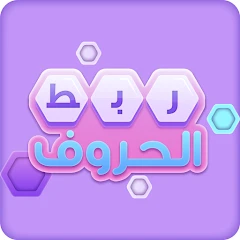
Wasl Words — Arabic word game app icon

Wasl Words

Arabic word game

Arabic word-connect puzzles — link letters, uncover hidden words and solve crosswords over scenic backdrops.

( Gameplay — RampRider, captured in-engine )

zainilabs.com — RampRider

( The direct answer )

What is a branded game and why would a company commission one?

A branded game is a playable experience built around an organisation’s message — used at exhibitions, in training, for recruitment or as a campaign. Branded games for businesses work because attention is voluntary: people choose to play, and average engagement time is measured in minutes rather than the seconds a video gets in a feed.

( Play — inside the studio )

( What we deliver )

Branded & advergames

Web, mobile or kiosk games built around a campaign or product — branded games for businesses that want more than a five-second ad, delivered through our mobile game development services

Exhibition & booth interactives

Touch, motion and multiplayer experiences for GITEX, LEAP and stand builds — a core part of our interactive kiosk development work

Serious games & training sims

Procedure, safety and onboarding simulations with scoring and reporting

Gamified apps & loyalty

Progression, streaks and reward mechanics inside an existing product — gamification services that turn everyday products into habits

Real-time & interactive installations

Unreal-driven environments for venues and permanent spaces, including AR experiences built by our AR game development team

Original IP

Our own titles through Zaini Labs — we ship games, not only client work

( How the work runs )

/01 — Concept & loop design

Before art, we define the core loop: the ten seconds a player repeats. If that is not fun, nothing downstream saves it.

1–2 weeks
/02 — Paper & grey-box prototype

A playable, ugly version. The cheapest possible way to find out whether the idea works.

2–3 weeks
/03 — Art direction

Style frames, UI kit and asset pipeline defined against the platform’s performance budget.

2 weeks
/04 — Production

Engineering, art and level content in sprints, with a playable build at the end of every one.

6–16 weeks
/05 — Playtest & balance

Real players, watched silently. Difficulty, onboarding and drop-off get fixed by evidence, not opinion.

2–3 weeks
/06 — Ship & operate

Store submission or venue deployment, analytics, and a post-launch window for the issues only scale reveals.

2 weeks +

( Reference )

Platform choices and what they commit you to

Platform is a business decision before it is a technical one — it sets your reach, your cost and your update cycle. As a mobile game development company, we help you weigh reach against cost across iOS, Android, browser and venue hardware, whether the build runs on Unity or Unreal.

PlatformReachWhat to know
WebGL / browser gameHighest — no install, one linkMust run on mid-range phones; keep the build small — our Unity game development pipeline is built for this
iOS & Android nativeHigh, but install frictionApp store review cycles; ongoing OS update maintenance
Exhibition kiosk / touchFocused, high-intentBuilt to fixed hardware; must survive an unattended eight-hour day
Unreal real-time installationVenue-bound, high impactNeeds specified hardware and a defined viewing setup
VR / headsetSmall but immersiveSession length, hygiene and staffing are real operational costs

( Worth knowing )

Find the fun before you commission the art

The most expensive way to build a game is to design the visuals first and discover afterwards that the loop is boring. Grey-boxing — a playable prototype with no art at all, just blocks — is unglamorous and it is the single highest-return stage in the process. It costs a fraction of production and it is the only reliable way to learn whether people will actually play. Any studio that wants to skip straight to concept art is selling you a video, not a game.

Branded games earn attention rather than buying it

A pre-roll ad is an interruption someone tolerates for five seconds. A game is something a person opts into and stays inside for minutes at a time, and they leave having formed an actual memory of doing something rather than of being told something. That is why exhibition interactives outperform screens playing a loop — at GITEX or LEAP, the stand with something to play is the stand with a queue, and a queue is the point.

A game is a product, not a deliverable

Films get delivered and archived. Games keep running: operating systems update, browsers change, venue hardware gets replaced, and players find edge cases nobody predicted. As a game development company, we budget for a maintenance window after launch and say so before contracts, not after, because a game with no post-launch plan quietly stops working within about a year — and the client usually finds out from a customer.

( What drives the price )

Cost factors, stated plainly

Scope of the core loop

One well-executed mechanic beats five shallow ones and costs far less.

Content volume

Levels, characters and assets scale cost almost linearly. Procedural or reusable content changes the maths.

Platform count

Every additional platform adds build, test and certification work — it is not a free port.

Multiplayer & networking

Real-time multiplayer is a step change in engineering complexity and server cost.

Art fidelity

Stylised low-poly is fast and ages well. Photoreal is slow and hardware-hungry.

Live operations

Analytics, updates and content drops are an ongoing line, not a one-off.

We scope games in phases with a playable build at the end of each, so you can judge with your hands whether to continue, expand or stop — rather than committing the whole budget to a document.

( Selected work )

Proof, not promises

( Questions we actually get asked )

Frequently asked

How much does it cost to develop a game?

The honest range is enormous, because a single-mechanic browser game for a campaign and a multiplayer exhibition installation are different products. The variables that matter most are the number of distinct mechanics, the volume of content, how many platforms you ship to and whether it is multiplayer. Whether you need full mobile game development services or a single browser experience, we scope in phases with a playable build at each gate, so you commit budget in stages against something you can actually try rather than against a specification document.

How long does it take to build a branded game?

A focused browser or kiosk game is typically three to five months from concept to launch. Larger interactive installations and multiplayer builds run six months and up. The prototype phase is the part not to compress — two or three weeks of grey-boxing routinely saves months of building the wrong thing beautifully.

Unity or Unreal — which do you use?

Both, chosen per project. Our Unity team is generally the pick for mobile and web where build size and broad device support matter. We choose Unreal when visual fidelity and real-time rendering drive the experience, particularly for installations and venue work. We will explain the trade-off for your specific case rather than defaulting to house preference.

Can you build something for our GITEX or LEAP stand?

Yes — exhibition interactives are a regular part of our work, including our interactive experience for e&. Our interactive kiosk development process has its own discipline: builds must be learnable in about five seconds by someone walking past, survive eight unattended hours a day, and fail gracefully when someone does something strange. We also plan the hardware and on-stand operation, not just the software.

Do you make your own games?

Yes, through Zaini Labs. It matters more than it sounds — a studio that only takes client briefs never has to live with its own decisions after launch. Shipping our own titles means we have felt what a bad onboarding flow or an unbalanced difficulty curve actually costs, and client work benefits from that.

Can you gamify our existing app instead of building something new?

Often that is the better investment. Our gamification services add progression, streaks, achievements and reward loops to a product that already has users, which is far cheaper than acquiring users for a new one. We would want to look at your retention data first — gamification amplifies a product people already have a reason to open, but it will not rescue one they do not.

Who owns the game and the source code?

You do, for commissioned work. As a game development company, we set out ownership and source-code delivery explicitly in the quotation. We will also flag any third-party engine licences, middleware or asset licences that carry their own terms, so there are no surprises if you later take the project elsewhere.

What happens after launch?

We recommend a maintenance agreement, and we are direct about why. Operating systems update, browsers change, venue hardware gets swapped, and players find edge cases nobody predicted. A game without a post-launch plan tends to break quietly within a year. We would rather scope that honestly at the start than have you discover it from a customer.

( Related )

( Next service )Mobile App Development →

Have a project in mind?

Let's create
together